From working in audio to new roots showing
My journey from working as an audio engineer into playing traditional folk music.
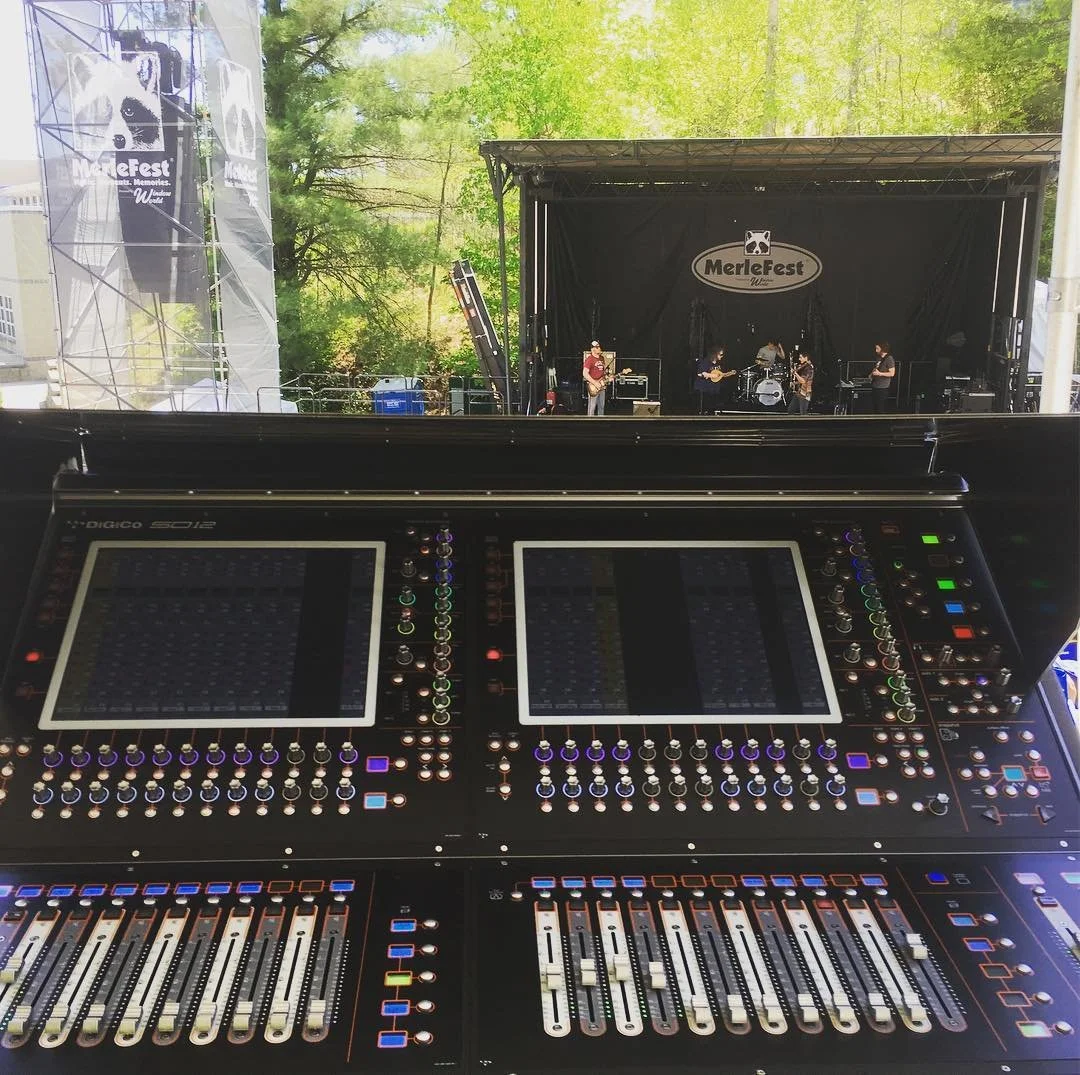
Pictured: Sound check for Scottish indie-folk band Elephant Sessions in North Carolina, USA 2019.
Many of the sound engineers I have worked with who specialise in mixing traditional music, often come from a background of playing music in a tradition local to themselves, or with connections from their diaspora present in a similar context. My own career path as a sound engineer has been in some ways the opposite of this experience: Before I understood the difference between a jig and a reel or knew how to play any folk tunes, I was mixing headline bands on the international folk scene.
My own journey into this work started relatively early in my career, having personal access to a portable PA system and my own transport helped open that world to me. Shortly after moving closer to the Newcastle city centre, I started picking up work in nearby village halls with independent bands who hailed from that locality and had moved to the city. These bands had connections within their local music scene and would book more traditional support acts, partly to draw in a local audience.
The closest I’d come to engaging with traditional music personally was growing up playing generally more contemporary styles of acoustic guitar as my first instrument, briefly dabbling in fingerstyle guitar, jazz and the blues. This was largely self-taught for the first five years, drawing influences from whoever I was listening to at the time, without much awareness or interest at the time in the history or where the music came from in terms of influence and heritage, partly because I was isolated from collaborating with anyone involved with a local community in a similar context at the time.
I did have the opportunity to go to a tune session once as a teenager, my father was supportive at the time, suggesting I bring my acoustic guitar. At this point, I was capable on the instrument; enough that I had played in some rock bands with my brother, friends and regularly accompanied myself singing original compositions. However, the idiomatic style of accompanying tunes in real time completely baffled me, the other guitarist at the session was playing in an alternative tuning and my ear wasn’t developed enough to follow what was happening musically. This was my first and last attempt at participating in a tune session, for over fifteen years following this experience.
I was however influenced more by traditional music of black origin, particularly by American guitarists. At a similar time, a childhood friend with more academic inclinations and an obsession with Sonic Youth gifted me a CD by one of Thurston Moore’s “spiritual models,” (O’Rourke 2000), John Fahey’s “Legend of Blind Joe Death,” album, here I collected an old tune that I learnt by ear aged seventeen without understanding the liner notes “(Trad) … As stated elsewhere, this one is not to be confused with versions of "Poor Boy" (e.g. by Banjo Joe) which use this title just because everyone else does.” (Fahey no date, para 3.)
This liner note seems misleading in hindsight, apart from the note on it being traditional, listening to the recording in question of Banjo Joe the name is identical, and the tune sounds incredibly similar, just a different arrangement with different variations. On surface value, this could be seen as explicitly ignoring the history of this music. After doing some more digging through the notes from different editions, it seems like this is vaguely referencing that he learnt from a version released the same year by Barbecue Bob.
It’s understandable that I didn’t become more interested in where the music had come from aged 15, as this well-produced white guitarist I was inspired to learn to play from a recording by ear wasn’t consistently describing it. In fairness to Fahey, liner notes for a personal album are perhaps not intended as an in-depth musicological text. Soon after I found a box set of Charlie Patton recordings, including a book Fahey wrote on the subject. A predecessor of Robert Johnson, Patton was a key influence on many artists for years to come “his bottleneck slide style and dark growl almost a template for what became known as the Delta blues.” (Reid 2024) He also drew influence from and performed new arrangements of music from a variety of traditions.
A record store local to me in Newcastle, Alt. Vinyl had a phenomenal guitarist and singer working there who I was particularly influenced by as a teenager, Richard Dawson, now a successful touring artist with a cult following. As well as attending many of Dawson’s early shows, even opening as support for him once at a local pub, I used to frequently buy whatever he was listening to in the store at the time. It was here that I came across an album by Mississippi singer Junior Kimbrough. Kimbrough learnt to sing by oral tradition from his father and has been described as a neo-traditional blues artist “Neo-traditional artists drew upon traditional styles and repertoire but had shaped individual styles and added modern elements, often performing with electric instruments…” (Evans, Fahey 2015). His work was popularised during the 60’s folk revival, a notable part was played in this by Lomax: “Junior Kimbrough and others…came to the attention of the world at large through the work of folklorists like Alan Lomax.” (Keith 2020)
One of the critiques of Lomax’s work in this context is that it was part of developing or encouraging potentially questionable theories on the origin and evolution of the blues. “Like many popular myths and stereotypes, these blues myths are based on some degree of fact, truth, or observable reality. Under close scrutiny, however, they fall short as general explanations or interpretations of the blues.” (Evans 1999) Whilst Kimbrough’s work is undoubtedly part of an oral tradition and music of black origin, in Evans’ view this is believed to have its roots in the early 20th century.
Jake Blount, a roots music academic, singer and musician, argues that by necessity oral tradition has changed in the last century to include archival recordings. “This scarcity of living elders and intact musical lineages… has made today's Black string band musicians (myself included) heavily reliant on twentieth-century archival sound recordings of our forebears.” (Blount 2024)
Pictured (top): Sound check for Scottish indie-folk band Elephant Sessions in North Carolina, USA 2019.
Reference list:
Fahey, J. (2000). Introduction by Jim O’Rourke. How Bluegrass Music Destroyed My Life: Stories. United States: Drag City Incorporated.
Available at: https://www.johnfahey.com/hbmdml.htm (Accessed 22/1/26)
John Fahey (no date) The Notes on the Songs: The Legend of Blind Joe Death Available at: https://www.johnfahey.com/pages/blind-joe-death-notes.php (Accessed: 22/1/2026).
Reid, Graham (April 28, 2024) WE NEED TO TALK ABOUT … CHARLEY PATTON: A riddle wrapped in an enigma Available at:
Fahey, J. Evans, D. (2015) Mississippi Blues Today and It’s Future: New Preface, from Charlie Patton: Voice of the Mississippi Delta. University Press of Mississippi. Originally published with a different foreword in 1970. Available at: https://www.google.co.uk/books/edition/Charley_Patton/WJdWDwAAQBAJ?hl=en&gbpv=1 (Accessed on 6/3/2026)
Evans, David (1999) Demythologizing the Blues. Newsletter – Institute for Studies in American Music; Brooklyn Vol. XXIX, Issue 1. Available at:
https://www.proquest.com/openview/edd32a582776e63fdc570f9f63d5b583/1?cbl=2043350&pq-origsite=gscholar (Accessed 26/2/26)
Blount, J. (2024) ‘Jail the Zombie: Black Banjoists, Biopolitics, and Archives’, Modern American History, 7(2), pp. 301–306. doi:10.1017/mah.2024.30. Available at: https://doi.org/10.1017/mah.2024.30 (Accessed 21st January, 2026)
Primary network connections between the Newcastle folk scene, with the lowlands, highlands and islands of Scotland.
A review of my primary network connections between the Newcastle and Glasgow folk scenes, exploring further intersections between the highlands and islands of Scotland
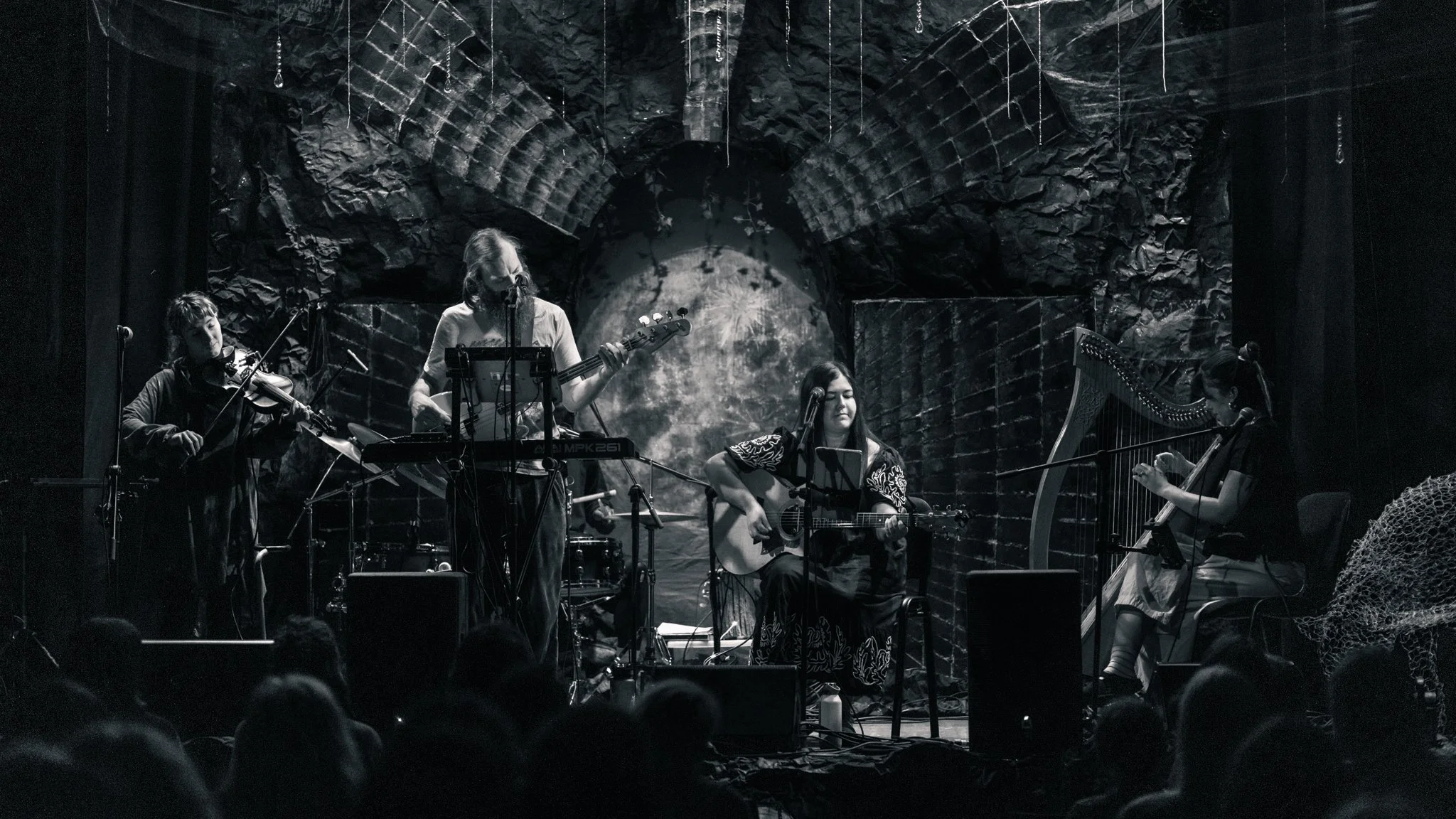
Photo of Cosys Ex collective performing at the Allen Valley Folk Festival in 2025. Image credit: AM Photographics
The Northeast of England has attracted young folk musicians from across the UK and further afield for decades now, instrumental in this was a project founded there in 1988 “Folkworks, a dedicated folk arts development agency based in Newcastle… the organisation was to have a considerable impact on the subsequent teaching of folk and traditional music both in Britain and beyond.” (Price 2017)
Many of the people in my primary network directly benefitted from the Folkworks project as young musicians. Although I didn’t personally get involved with their programmes, I studied contemporary and jazz music alongside some of the young musicians who were, in the Sage Gateshead weekend school for young musicians. The legacy and ongoing work of this project is still very noticeable to me in the local folk music scene today, with some of my peers teaching as part of their programmes.
A later development of this in the region included the Folk and Traditional Music degree founded in 2001 (Newcastle University 2022), one of the first of its kind. Shortly after the degree programme started, Folkworks was integrated into the North Music Trust at the Sage Gateshead building in 2002. (Price 2017) I was studying at an undergraduate level on a different programme focused on jazz, popular and contemporary music. The Folk and Traditional Music degree attracted musicians from across the UK and further afield, including Alasdair Taylor from Inverness, one of the founding members of Elephant Sessions. This was where he met local bass player Seth Tinsley (John 2022), I had worked with Seth previously in a technical role for a show he was playing in another band.
After being a fan of Elephant Sessions for a couple of years, I was delighted to be asked to mix live performances for them at a few festivals and events in North America. This was long after I completed my undergraduate studies but was one of the experiences that inspired an interest in Scottish music. Particularly because they were fusing traditional influences with genres I was more actively participating with, including indie rock and electronica. This departure from tradition and making something new using that influence was the thing that really grabbed me.
Anecdotally, various participants described to me the Folk and Traditional Music degree as not being particularly encouraging of innovation, suggesting its primary purpose is to share and encourage traditional music making. The academic studies referencing the course to date suggests there may well have been some contradictions between pedagogies, but many of the modules of the course actively encourage improvisation and composition of new material, at least. (Keegan-Phipps 2008)
A formative personal connection I developed from my work as a sound engineer, was with another Scottish band called Eabhal. This was one of the village hall connections from my work hiring out a PA system for Newcastle bands, including those with more rural roots nearby. The original line up of Eabhal met studying music in the Outer Hebrides on Uist, they were my first primary connection to music from the area.
One of the members of Eabhal grew up in Allendale in the Northeast of England, and some of their repertoire at the time included local songs describing a history of land rights in the area. This combined with their community connections to the area contributed to them being able to sell tickets locally, making them a popular choice as a guest act so we worked together several times incidentally before they reached out to employ me directly in 2019. At this point they had started working with a Gaelic singer, Kaitlin Ross.
Two years later when I received funding from Arts Council England, I had the opportunity to develop my own creative practice and decided to focus on the intersections between folk music and dance music that had been inspiring me in recent years. This funding included a reasonable budget for new collaborations, so I approached Kaitlin and three other musicians from a traditional folk background, some of them had completed the Folk and Traditional Music degree and I had noticed similar interests in making new music with some of their previous projects.
We spent a week playing together and recording our ideas, some of them contemporary arrangements of traditional Gaelic songs collected by Kaitlin. These collaborations led to forming a band called the Cosys Ex collective, who started performing live soon after. Many of these musicians were already based in different cities and are much in demand as professionals in their respective scenes. As part of working out how this collective might operate with a diverse pool of musicians, depending on availability and budget, it became important for me to learn these Gaelic songs myself.
The funding had at this point ran out, but using the skills developed and recordings taken during this time, I began to teach myself the songs using a creative method of sampling the audio, splitting and playing it back at a slower speed using Ableton Live. This allowed me to learn the vocal sounds relatively quickly, although this method was not always completely accurate, I was aided in correcting inaccuracies by my collaborators including Kaitlin whenever we had the budget or time to work together again.
The role of technology has been influencing traditional music making for generations now, whilst songs are still passed down orally in some cases many song collectors have been using recorded mediums to play back not only their inspirations but their mentors. For example, using simple phone recordings to collect tunes and songs has become increasingly popular as technology becomes more accessible to everyone.
After publicising Cosys Ex collective, I was approached by an organisation called Borneo Bengkel. They had received British Council funding to deliver a larger project called the Living Archive, featuring musicians connected with the Northeast of England and Borneo . I co-curated this project in the UK including members of Cosys Ex and other musicians connected to the regions, it was a project designed to encourage cross-cultural collaborations in a digital medium with artists drawing influence from traditional backgrounds.
Photo of Cosys Ex collective performing at the Allen Valley Folk Festival in 2025. Image credit: AM Photographics
Reference List:
Price, M. (November 2017) ‘Chapter 4. Folkworks: Tradition in the Making,’ Changes in the Teaching of Folk and Traditional Music: Folkworks and Predecessors Newcastle University. Available at: https://1library.net/document/qmrx9l4y-changes-teaching-folk-traditional-music-folkworks-predecessors.html (Accessed 10/2/2026)
Newcastle University (5th April 2022) Newcastle University’s Folk and Traditional Music degree turns 21. Available at: https://www.ncl.ac.uk/press/articles/archive/2022/04/folk21st/ (Accessed 6/3/2026)
John, Emma (11th April 2022) Scottish Folk-Fusion Band Elephant Sessions Achieve Their Musical Destiny Available at: https://thebluegrasssituation.com/read/scottish-folk-fusion-band-elephant-sessions-achieve-their-musical-destiny/ (Accessed on 6/3/2026)
Keegan-Phipps, Simon (2008) Teaching folk : the educational institutionalization of folk music in contemporary England. Newcastle University. Available at: http://theses.ncl.ac.uk/jspui/handle/10443/263 (Accessed 10/2/2026)

Exploring the history of radio ballads, a personal perspective
Exploring the history of radio ballads from a personal perspective, including recent discussions with Ceitidh Mac
Photo of “Sound Weave: the Living North,” by Ceitidh Mac, performed at the Glasshouse International Centre for Music. Image credit: Victoria Wai
This blog will discuss a brief history of the radio ballad, including the origins of it and some of its greater exponents. My own personal connection to this and relevant experience is my work in events. Recently, I had the privilege of working behind the scenes on another event with Peggy Seeger, she was a part of the original team who created the first radio ballads from 1958 to 1964. Peggy and her team were great craic to work with, when we met, she commented “…like something out of o brother where art thou,” most likely referring to my long beard.
Seeger’s website features an essay from her primary musical collaborator on the radio ballads, Ewan MacColl, who describes their journey through creating this format together: "It was immediately apparent that we had recorded a unique picture of a way of life told in a language charged with the special kind of vitality which derives from involvement with a work-process." (MacColl 1981)
Listening to their first published piece in the medium "the Ballad of John Axon," (MacColl, Parker, Seeger 1958) it is clear how this work has continued to be such an influential piece to this day, a beautiful account of both the working and home life of its subject, his family members and peers; John Axon was a locomotive driver who died in 1957 under heroic circumstances. At just under an hour in length, it’s an epic longform piece with many notable aspects. You can listen to The Ballad of John Axon here on Ewan MacColl’s Bandcamp.
The consistent musical influence throughout this work is that of the post-war folk song revival, MacColl was partly inspired by one of Peggy Seeger’s recent collaborators at the time, Alan Lomax “under the influence of the American folk song collector Alan Lomax, returned to the traditional songs of his youth.” (Howkins, 2000) This was an important intersection for the work, as MacColl would compose the radio ballads with a ring of authenticity that came from studying old songs and styles of performing them in detail.
I was also lucky enough to part of a live production including a performance of a long form radio ballad inspired performance (The Glasshouse ICM, 2023), produced by Newcastle based singer songwriter, Ceitidh Mac. This was the culmination of her year as artist in residence, in the Glasshouse International Centre for Music. Her performance was called Sound Weave: The Living North. It featured a live six-piece band, singing original and traditional material influenced by a collection of interviews and footage. These interviews were played back as part of the performance, creating a powerful experience showcasing the lived experience of those interviewed, lifting their words and collected songs.
I interviewed Ceitidh about her education, inspirations and process: She has a direct link to the history of the radio ballads and was introduced to the concept during her first year studying on the folk and traditional music degree in Newcastle, by her lecturer Sandra Kerr. Kerr was herself a former dedicated student of Ewan MacColl and Peggy Seeger, receiving direct tuition from each of them, after being inspired seeing them perform at the Singers’ Club, a dedicated song performance space “perpetuating a particular style of folk music, setting standards for its performance.” (Street 2021)
Kerr later became involved with the Critics’ Group, a theatrical organisation evolved from the Singers’ Club, both ran by MacColl and Seeger, formed in 1964 following the release of their last BBC broadcasted radio ballad. They performed a yearly theatrical satire featuring original songs and topics showing clear influences from the Radio Ballads – for example “they campaigned for the rights of travellers…” (Street 2021) the final radio ballad released was on the same subject.
Kerr describes receiving direct tuition from MacColl and Seeger during this time, living with and working for the pair, “listening to the field recordings that Ewan and Peggy had in their wonderful library.” (Smith 2019) Field recordings and new technologies are integral to the radio ballad form, providing not only speech and incidental sounds, but also crucially replacing the narrator and instead using people’s own words to tell their stories.
Ceitidh described to me this aspect of the radio ballads being particularly important to her, “I found it a very inspiring way of storytelling. The thing that really drew me to it is that it’s telling everyday life stories, in people’s own words so there’s no narrator. So, there’s not this powerful person who’s explaining things… The fact that it was radical at its time, but it also feels radical now.”
The BBC commissioned a second series of radio ballads in 2006, this time recorded, written and produced by John Leonard and musically directed by John Tams, broadcasted on Radio 2. “This new series featured specially composed songs and interviews with those affected by a variety of current social and political issues.” (Zierke 2026) One of the songwriters featured in later programmes of this series including “The Ballad of The Big Ships,” (BBC 2006) was Newcastle based folk singer Jez Lowe. This episode focused on the lives of shipbuilders from Tyne and Wear and the Clyde.
Lowe was later approached by sound artist David de la Haye, (a mentor of mine during my Arts Council funded creative development in 2021) as part of the Land Lines Project artist commission “Tracks, Traces and Trails: Nature Revealed.” (Land Lines 2020) he wanted to collaborate with Lowe from a very different perspective, writing songs with recorded underwater sounds on location from freshwater spaces “A radio ballad for aquatic lifeforms,” (Land Lines 2020)
Photo (top) of “Sound Weave: the Living North,” by Ceitidh Mac, performed at the Glasshouse International Centre for Music. Image credit: Victoria Wai
Reference list:
MacColl, Ewan (1981) The Radio Ballads: How they were made, when and by whom. Available at:
https://www.peggyseeger.com/discography/ballads/how-the-radio-ballads-were-made
(Accessed: 24th September, 2025)
Howkins, A. (2000). History and the Radio Ballads. Oral History, 28(2), 89–93. http://www.jstor.org/stable/40166862 (Accessed: 5th January, 2026)
The Glasshouse International Centre for Music (24 February, 2023) Ceitidh Mac in Conversation Available at: https://theglasshouseicm.org/read-watch-listen/ceitidh-mac-in-conversation/ (Accessed: 24th September, 2025)
Street, John (December 15, 2021) The Critics’ Group and the Singers’ Club: Intermediaries in Action. Available at: https://oursubversivevoice.com/case-study/the-critics-group-and-the-singers-club-intermediaries-in-action/ (Accessed: 23rd February, 2026)
Smith, Vic (December 2019) Sandra Kerr – Rebel with her Chords. Issue 131, The Living Tradition Available at: https://www.livingtradition.co.uk/articles/sandrakerr (Accessed: 23rd February, 2026)
Zierke, Reinhard (February 2026) The 2006 Radio Ballads Available at: https://mainlynorfolk.info/folk/records/radioballads2006.html (Accessed 23rd February, 2026)
BBC (December 2006) The Ballad of The Big Ships Available at: https://www.bbc.co.uk/radio2/radioballads/2006/songwriters.shtml (Accessed 24th February, 2026)
Land Lines (November 2020) Hidden Sounds: Nature Revealed - by David de la Haye Available at: https://landlinesproject.wordpress.com/hidden-sounds-nature-revealed-by-david-de-la-haye/ (Accessed 23rd Fevruary, 2026)
Gaelic song, perspectives from the mainland, the Gàidhealtachd, and relating to natural world
Gaelic song, different perspectives from the mainland, the Gàidhealtachd and ideas in relation to post-natural world.
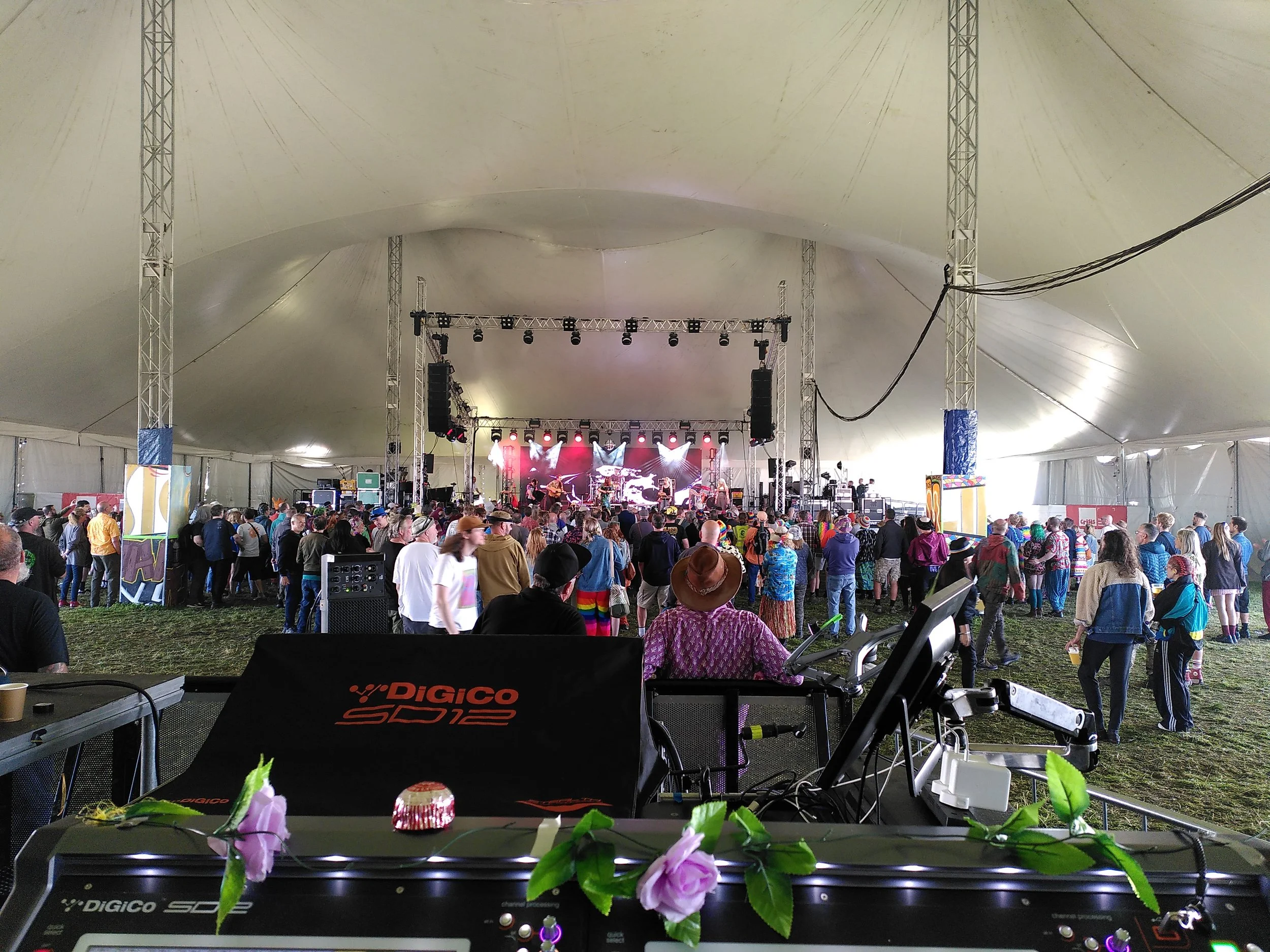
Photo from the mixing desk, showing Josie Duncan featuring on the clàrsach (Celtic harp) and vocals for part of a tour we worked together on with Kathryn Tickell & the Darkening in 2023
In Deirdre Graham’s podcast, Rona Lightfoot describes her mother being thrashed in school for speaking Gaelic in the playground “That’s only one generation back, and now they’re doing their best to encourage Gaelic, giving us back our culture.” (Graham 2023) A further shift in attitudes is noticeable with more recent generations in Gaelic speaking communities too, as well as it being institutionally encouraged with Gaelic Medium Education and media channels (Dunmore 2019) it has also started to become more popular with young people and more visible in popular culture.
Josie Duncan, a talented singer from the Isle of Lewis from my generation was kind enough to share her experience and insights as a Gael, in an interview collected as part of a radio ballad I’m planning to make with my project Cosys Ex collective, over the next year. For Duncan, growing up in the Gàidhealtachd she began speaking and singing in Gaelic from a young age, even appearing on national television from the age of seven. In school the language wasn’t as popular at the time as it is with the next generation, it’s becoming more accepted and encouraged following national efforts.
One of the topics we discussed was about how people might think differently in Gaelic about certain things, we discussed her experience of the language and culture, particularly noting deeper connections with nature. “It shows you how much we’ve lost that connection, because English is a newer language… Sometimes I prefer the way things are described in Gaelic.”
This connection with nature and language is particularly evident in Gaelic place names, “This very landscape forged the features of Scottish place names… and primarily denote natural features of the landscape of the target region.” (Kalinina 2023) For example Ardnamurchan translates in English as “peak of the great seas,” or Àird nam Murchan in Gaelic. (Kalinina 2023) Lewis itself is often described in reference to “undoubtedly one of the commonest plants on the island, to which has given the poetic nickname of Eilean an Fhraoich, or “Heather Isle.” (D. Arthur Geddes 1936)
Another person from the Isle of Lewis, Anne Campbell is mentioned in Robert Macfarlane’s book “the Old Ways,” she is an archaeologist and cartographer focused on close mapping an area local to her, she is particularly dedicated to the study of Gaelic place names or toponomy of her local region, Macfarlane describes seeing on her wall “the 1853 Ordnance Survey map of the islands, carried out by British surveyors who had anglicized the Gaelic place names and diminished the density of toponyms on the landscape.” (Macfarlane 2012) A notable writer herself, Campbell has published numerous works in Gaelic on the subject before and since then, she describes “a dense network of place-names, songs and stories connected with each part of the landscape.” (Campbell 2011)
Ceitidh Mac has roots on the Heather Isle too, we spoke about her father, a Gael from Stornoway with many generations before of MacLeods from Lewis. She tells me that for his generation living near town in Stornoway most of the locals spoke English more “so he grew up with his parents speaking to him in Gaelic but he’d always reply in English. So he could understand most things, but couldn’t always speak it as much.” Many families likely lost the Gaelic at a similar time, Ceitidh and Josie both noted the popularity of the language in the Gàidhealtachd was mixed between these two generations, with some Gaels considering it less modern or fashionable than it perhaps is becoming again now.
Photo from the mixing desk, showing Josie Duncan featuring on the clàrsach (Celtic harp) and vocals for part of a tour we worked together on with Kathryn Tickell & the Darkening in 2023
Reference list:
Graham, D. (10th December, 2023) EP 5: Seinn air a’ Phìob w/ Rona Lightfoot Gaelic Song Stories Available at: https://www.deirdregraham.com/gaelicsongstories/episode/4b06f872/ep5-seinn-air-a-phiob-with-rona-lightfoot (Accessed 17/2/26)
Dunmore, Stuart S. (2019) Language Revitalisation in Scotland, Linguistic Practice and Ideology. Pp. X-XI Edinburgh University Press. Available at: https://www.google.co.uk/books/edition/Language_Revitalisation_in_Gaelic_Scotla/q6MxEAAAQBAJ?hl=en&gbpv=1&dq=sapir+whorf+hypothesis+gaelic&pg=PR3&printsec=frontcover (Accessed 27/2/2026)
Kalinina, S. A. (11th May 2023) Toponymy of Celtic Scotland. EDP Sciences. Available at: https://doi.org/10.1051/shsconf/202316400062 (Accessed 5/3/2026)
Geddes, Arthur D. es L.Ph.D. (1936) Lewis, pp 225, Scottish Geographical Magazine. Available at: https://www.tandfonline.com/doi/pdf/10.1080/14702543608554914 (Accessed 5/3/26)
Macfarlane, Robert (2013) The Old Ways, Penguin. First published in 2012 by Hamish Hamilton (Ch7 Peat, pp. 151)
Campbell, Anne (18th March 2011) Anne Campbell The Croft Available at: https://thecroft.wordpress.com/2011/03/18/anne-campbell/ (Accessed 5/3/2026)
Exploring a history of collecting and adapting Gaelic songs for a wider contemporary English speaking audience
Exploring the history of collecting and adapting Gaelic songs for a wider contemporary English speaking audience
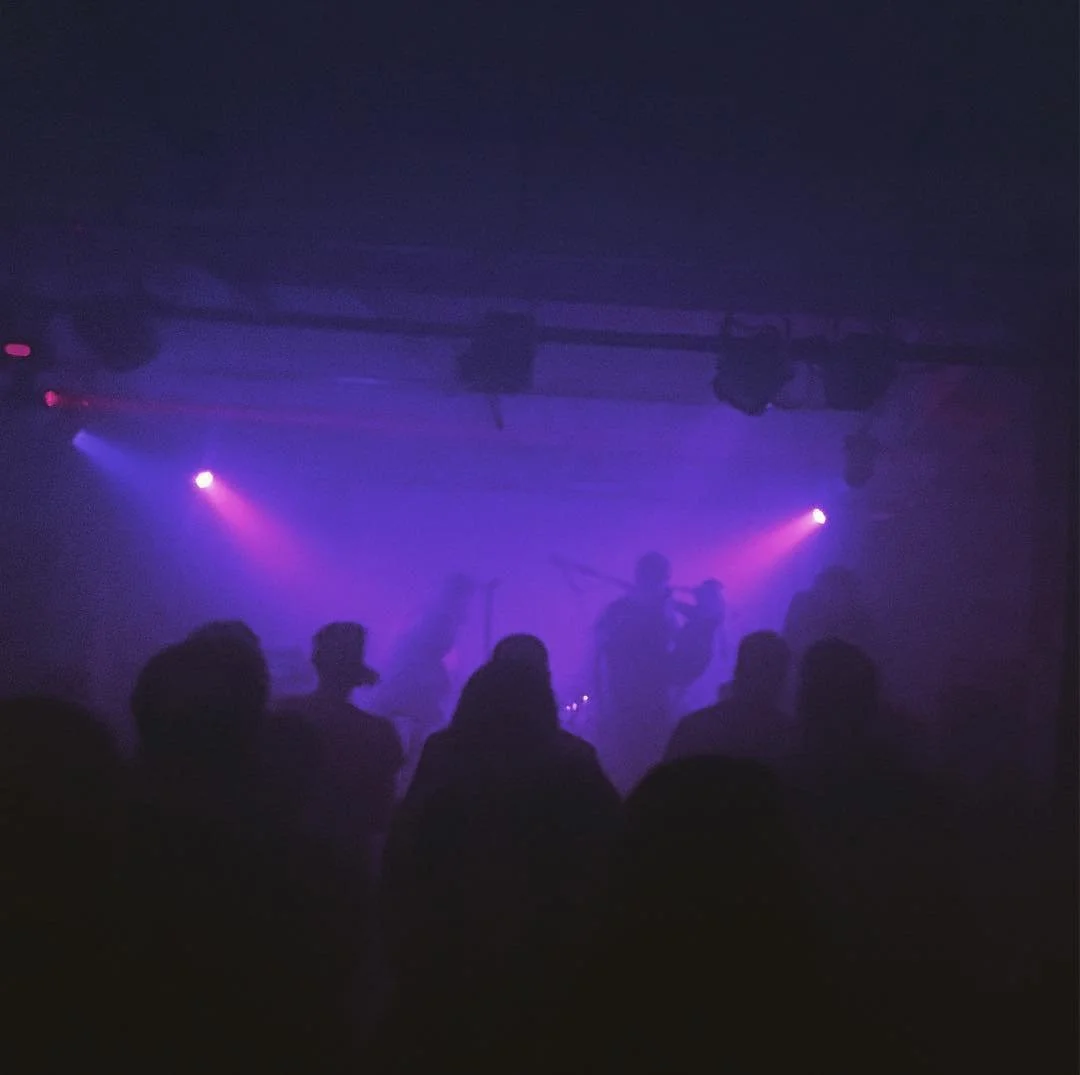
Photo from my work operating lights for Niteworks at a local club in Newcastle 2018
A wide variety of political movements, community efforts and cultural forces have played significant roles in preserving Gaelic language today. One of the cultural aspects is the popularised collection, recreation and performance of Gaelic song internationally. One of the key proponents of this in the early 1900s was Marjory Kennedy-Frazer, a musician from the lowlands of Scotland who developed a focused interest in collecting songs from the Hebrides, arranging and performing them. She “is responsible for many early popular arrangements of this kind, much sung in school choirs throughout the English-speaking world.” (Chapman 1997)
Kennedy-Frazer’s collaboration with Kenneth Macleod was instrumental in her work, he was from the Isle of Eigg, with deep family roots in Gaelic culture, he also became well versed in many dialects and song traditions. “Kenneth Macloed was thus heir to generations of orally transmitted lore from two of the great clan traditions of the Gàidhealtachd; and what he had not learned in boyhood he absorbed during his twenty-year career as a Church of Scotland lay preacher, and thirty as an ordained minister of the Gospel.” (Blankenhorn 2018)
One of the criticisms of Kennedy-Frazer’s legacy is the application of Western classical harmony, this has been readily adopted by Gaelic choirs and is a probable factor in broadening its popular appeal outside of the Gàidhealtachd, however there have been cultural objections by Gaels to the adaption of the songs, and Chapman argues something is lost here musically too. "…pentatonic tunes of great beauty are de-natured by their passage through a system based on a twelve-note tempered scale and functional harmony; the two systems are fundamentally incompatible, and much is lost in the translation from one to another." (Chapman 1997)
Initially my interest in traditional songs and tunes started with the sonic textures, or timbres in mixing audio for traditional instrumentation. At the time I was performing semi-professionally in a contemporary popular music context, predominantly with an artist from Dunoon called Martha Hill, playing synthesizers, bass and singing backing vocals. So, I understood on surface level a musical language of modal, pentatonic and diatonic key centres, and the rhythmic devices popular in the form. I also particularly appreciated the idiom’s more recent intersections with electronic dance music in the UK, drawing inspiration from bands I worked with.
Around this time, I discovered contemporary folk fusion band Niteworks, whilst operating lights for them at my job in a local nightclub and multi-disciplinary arts venue, Cobalt Studios in Newcastle. The band is named after a composition by the legendary piper Gordon Duncan, Obair Oidche. This “translates into English as ‘Night Work’. The band’s name comes from the same sample, a recording of elderly Gaelic speaker on their native Skye discussing the change of life on the Island.” (Hands up for trad 2015)
The personal connection to someone in their locality made this a highly appropriate choice for Niteworks to use the recording. However, I will be taking lessons here from the parallel histories of mainlanders’ including Kennedy-Frazer and the reception of their work by the Gaels; as to whether I should use archive recordings to inform, or to even be included as samples within my practice. Whilst I was very much inspired by Niteworks’ use of archive recordings, considering how this could be part of a contemporary radio ballad presents an ethical question.
Drawing inspiration from this neo-traditional approach, it’s my intention to develop a radio ballad that celebrates and includes people’s culture using field recording techniques, collecting and reproducing songs as accurately as possible, using some creative license with the consent of any participants, and sensitivity to their experience as being fundamentally different to mine.
I won’t be using archival recordings as part of constructing this radio ballad, partly because this doesn’t necessarily align with the format I’ll be using and mostly because I’m unlikely to have a personal connection to the recordings, so realistically I can’t request the consent of their subjects. One of the questions I would like to raise within interviews is how people from Gaelic speaking communities relate to archive recordings in the context of their own cultural practice, and if they have found personal connections or family history connected with those.
It may be important for me to distinguish between having “folkloric tastes,” (Chapman 1997), with a particular liking for Scottish or Irish tunes and songs, as opposed to using it as a vehicle to reclaim my Scottish or Irish heritage. In truth I was drawn to studying the language, by the musical and sonic aspects of my peers and colleagues’ inspiring performances, in the contemporary context of the UK music scene. Even my first active engagement with this creatively was playing instruments more disconnected from folk traditions, bass guitar, electric keyboards and electronic samplers. This form of contemporary fusion could be argued as part of a living tradition depending on the context, as our lives have become more digitised so have our approach to sharing and performing traditions.
The songs I have learnt in Gaelic so far have been collected from recordings of friends and colleagues, not from my Scottish mother who was excluded from learning Gaelic in school, or my great granny; the last Irish Gaelic speaker and singer in the family who I never met or heard. It remains a fact that I was born in England and raised here, so will approach the topic sensitively in the context of interviews. In my experience, people born and raised in Scotland can be understandably protective of their culture, language, and traditions, I intend to respect this particularly within the context of my creative practice rather than claiming it as somehow my own culture.
Photo (top) from my work operating lights for Niteworks at a local club in Newcastle 2018
Reference list:
Chapman, Malcolm (1997) Thoughts on Celtic Music, from: Ethnicity, Identity and Music - The Musical Construction of Place edited by Martin Stokes. First published in 1994 by Berg Publishers, reprinted on paperback in 1997. Chapter 2 pp39
Blankenhorn, V.S. (2018) Songs of the Hebrides and the Critics. Scottish Studies, 38, pp.1-53 Available at: https://open.journals.ed.ac.uk/ScottishStudies/article/download/82/80 (Accessed 1/3/2026)
Hands up for Trad (2015) Obair Oidhche by Niteworks Available at: https://projects.handsupfortrad.scot/folkwaves/obair-oidhche-by-niteworks/#:~:text='Obair%20Oidhche'%20is%20an%20instrumental,the%20legendary%20piper%20Gordon%20Duncan%2C (Accessed 4/3/2026)
Testing the waters. A contemporary radio ballad using primary network interviews
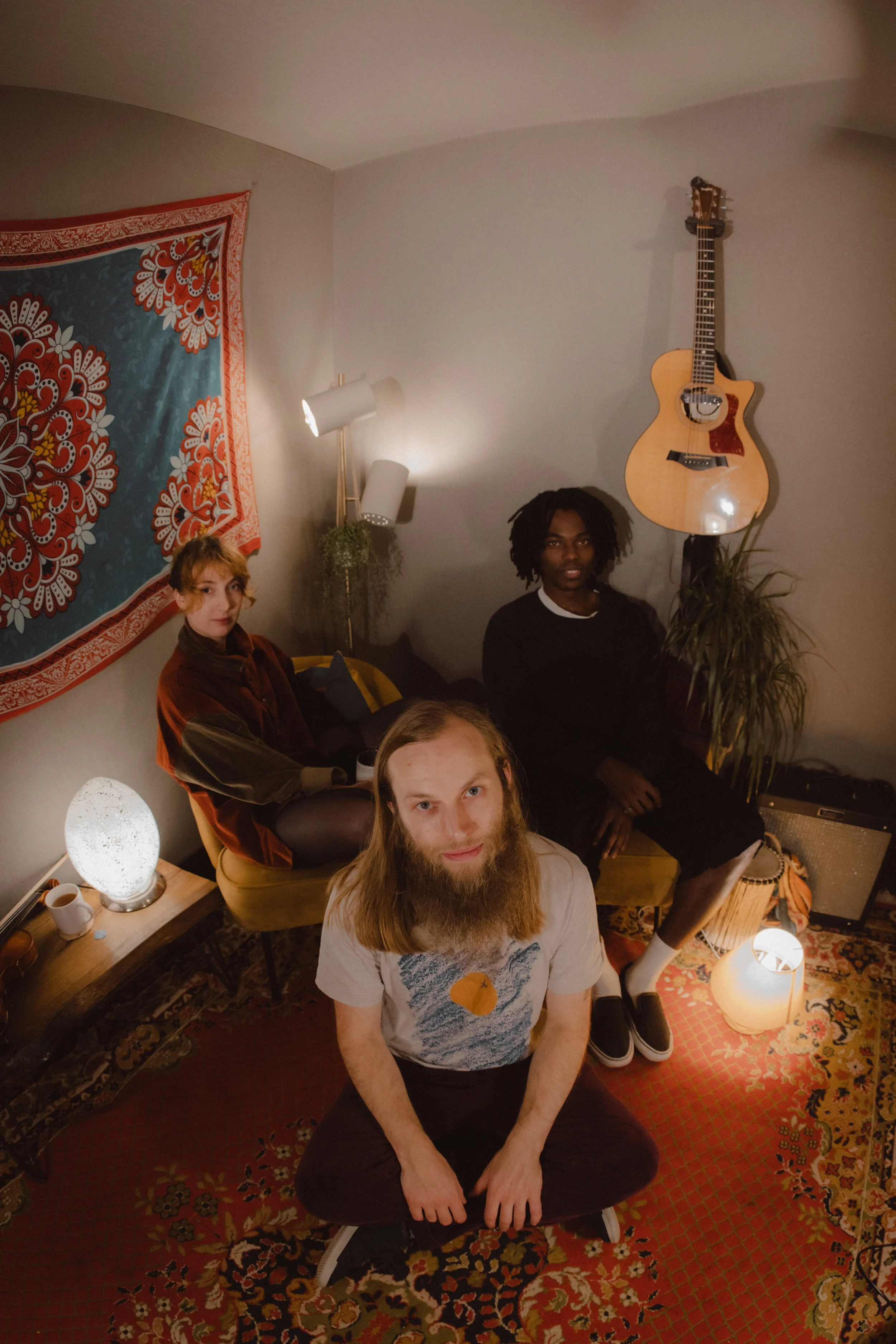
Photo of Cosys Ex trio, featuring regular Newcastle based collaborators; Merle Harbron and Diji Solanke. Image credit: Ellen Dixon
In 2025 I signed up for a short course in Gaelic at Sabhal Mòr Ostaig at a basic level, the UHI campus on the Isle of Skye. I spent a week in an immersive environment together with other students interested in learning the language there, I’ll be returning there in July this year to continue my studies at the next level. My hope is to improve my own understanding of the language to broaden my knowledge of the songs, culture and ideas of the Gaelic speaking world, in part to engage with this project on a deeper than surface value. I will continue recording there, travelling to Uist as well.
My intention is to build upon an existing network of Gaelic speaking friends and peers that I’m lucky enough to have connected with already from the highlands and islands, reaching out to those interested in sharing or discussing parts of their heritage and traditions. I also hope to bring my guitar and voice to share tunes and songs where appropriate in an informal pub session context, I will possibly be recording these interactions on location with the consent of any musicians participating and collecting interviews alongside this.
I’ll also be making a trip to Ireland this Spring, researching our own family roots with my mother in a trip to Donegal. The intention is to find out more about the place our ancestors grew up, perhaps collecting some of the songs they might have been exposed to or known in their lifetime, and ideally learning and practicing some Irish Gaelic on the way. This is in part a recreational trip, but I will be taking my field recorder and hoping to collect stories and songs on the way that may find their way into the final work too.
Considering my interview with Ceitidh Mac, consolidated by what I have read about the folk revival and the second more recently commissioned radio ballads from the BBC; I anticipate spending a great deal of time collecting, organising and editing these interviews and songs, to construct a narrative with the intention of telling people’s stories from these areas, not my own. I plan to develop the final project over the course of a year with this in mind, leaving time to review and mix it before sending it to any contributors wherever possible, for their approval before release.
Connections between Gaelic speaking communities and the natural world is an exciting theme to explore for me, this came up in conversation with Josie Duncan almost unprompted when I asked how she might think differently about some things in Gaelic. However, I will be taking lessons from Ceitidh Mac’s approach to her radio ballad, allowing interviewees space to draw their own conclusions and then continuing to work around the direction they take the narrative. For example, Josie’s interview has now inspired creating work in the style of David de la Haye’s radio ballad for aquatic lifeforms, as seen above. So, I hope to record sounds in nature whilst visiting Lewis over the next year, beginning with soil recordings using adapted contact pickups in areas with heather growing. These could provide an interesting sonic texture within the context of a creative piece.
Musically, continuing to collaborate with my peers in Cosys Ex collective will add a lot of value towards making this a sustainable project for me, rather than attempting to do it all by myself, losing perspective on the composition elements and ending up with something very far removed from the inspiration. We could make our own arrangements of some of the songs and tunes collected to accompany the original recordings, also writing some of our own material in response to interviews and found sounds including location recordings of the natural world.
For developing this work, I will hope to involve members from the wider Cosys Ex collective across the UK. But I will at least begin with the Newcastle based core trio laying the foundations of arrangements, for practical reasons. Here is a recently released tune set from us including original material written by our fiddle player Merle Harbron (inspired by Allendale), alongside popular traditional tunes from the Isle of Man and Harris.
Photo (top) of Cosys Ex trio, featuring regular Newcastle based collaborators; Merle Harbron and Diji Solanke. Image credit: Ellen Dixon